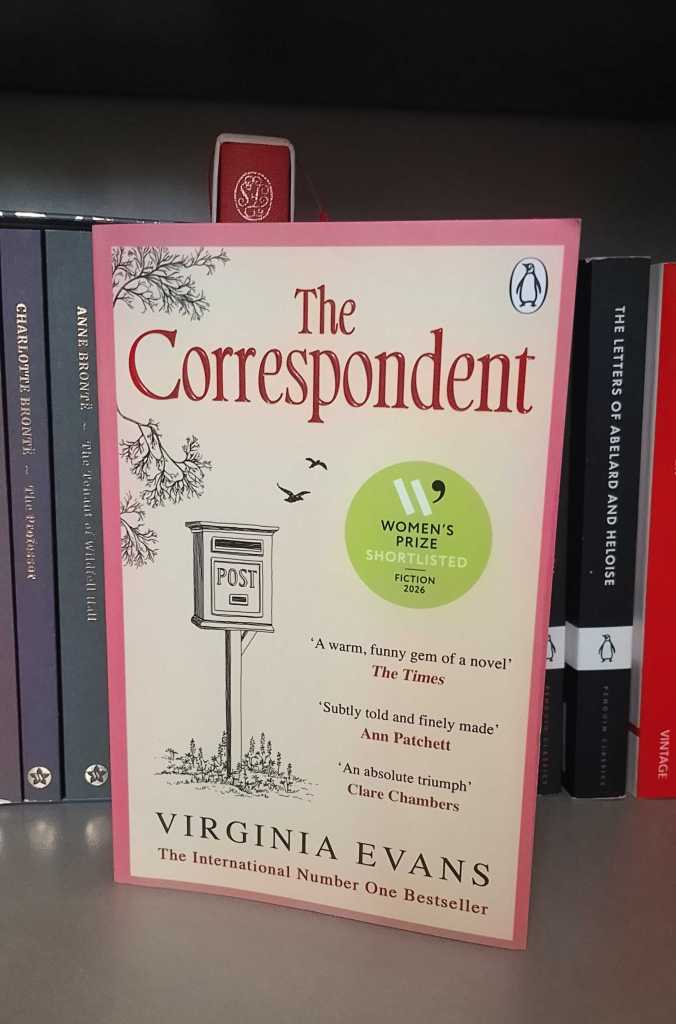
Sybil Van Antwerp is seventy-three, slowly losing her sight and always writing letters…
To her children. her favourite authors. Her ex-sister-in-law. The journalist poking into her past. Her doctor. Suitors. Kindly neighbours. The infuriating gardening club.
All receive Sybil’s witty, wise correspondence, rich with everyday concerns.
But there is one letter that she never sent. It concerns the darkest period of her life. To post it, Sybil must find forgiveness within herself.
But the hardest letter to write is the one you’d never dare to send.
I often find winners, and even the shortlisted selection, of things like the Women’s Prize to be incredibly love or hate with an incredibly mixed variety of plots, writing styles and research levels from authors that naturally you’re unlikely to love them all. There are several books, and authors, that give me a large head-tilt as to “how is anybody even reading this let alone making it so well loved?”.
So naturally, I went into The Correspondent by Virginia Evans with a huge amount of scepticism and reservations despite seeing swathes of praise before it even hit the lists, let alone winning it, from people in book communities that I generally trust their word of. But, I did take something that many of them said with great importance and picked a physical copy up; Several reviews mentioned that the issue with the audiobook, a format I find easier to fit into my life, was a disaster for this book because of the narrator constantly reading out the to and from email addresses in full and it taking them out of the flow.
Sybil is absolutely a witty and outspoken lady who seems to get what she wants through her penmanship. From books being sent by famous authors through to swanning into a university campus to audit English courses But, there is something much darker about Sybil as she also uses this is a way to avoid phone calls, conversations and saying things she might regret and cannot take back. You can sense her hurt, perhaps her caution at the world too and all this is added to with her sense of black and white through her expansive and impressive legal career but it takes us a very long time to fully understand why.
There are moments throughout that do get me, and I’m sure many other readers, thinking about life, living and the fragility of our direct and distant worlds. The deterioration of Sybil’s eyesight and her starting to seemingly panic results in her putting more thoughts, feelings and confessions into words to those she does, and doesn’t, know and it reminds us to do things we love, go to places we want to explore and to explain things to people whilst we have the chance (whether that’s in written or vocally). But beyond all that it reminds us that there are some things, big and small, that we will carry through life with us and those things can define relationships with ourselves, our daily lives and with people around us as well; We all have our own coping mechanisms but sometimes they are destructive and avoidant and this was visible when Sybil contacts her daughter by letter instead of a phone call or face to face conversation instead.
One of the last couple of letters in the book explains the guilt, pain and secrets Sybil was holding for decades and how that caused so many tricky relationships for Sybil with some people she corresponded with frequently. And throughout a larger section of the book we are encouraged to feel some sympathy for this aging old lady that is losing her sight but at the end, even with the big reveal, I’m not entirely sure that I felt sympathy for her. If anything I felt more sympathy for one of her neighbours who treated her with much friendship for a long time with little reciprocation until the end. If anything, I think Sybil is incredibly selfish with her correspondence and one of the letters that she attempted to write, repeatedly, but never sent to her ex-husband only highlights this; Incredibly selfish because I believe that he deserved closure on something that haunted him and their whole family for decades but it didn’t seem to suit her narrative or penmanship style so avoided it until it was too late.
I feel a nice ending of the book would have been some people sending her a final letter, post her life ending, to share updates on their journey, some added extra memories or even what they really thought of Sybil as this would have been in tune with the book style and Sybil’s presented personality.
Overall, it was an enjoyable format and a delightful little read. It wasn’t ground-breaking or feeling like something that I would hugely recommend somebody goes out of their way to read but a decent 4/5 stars regardless.

 DANNIIXBHRI