
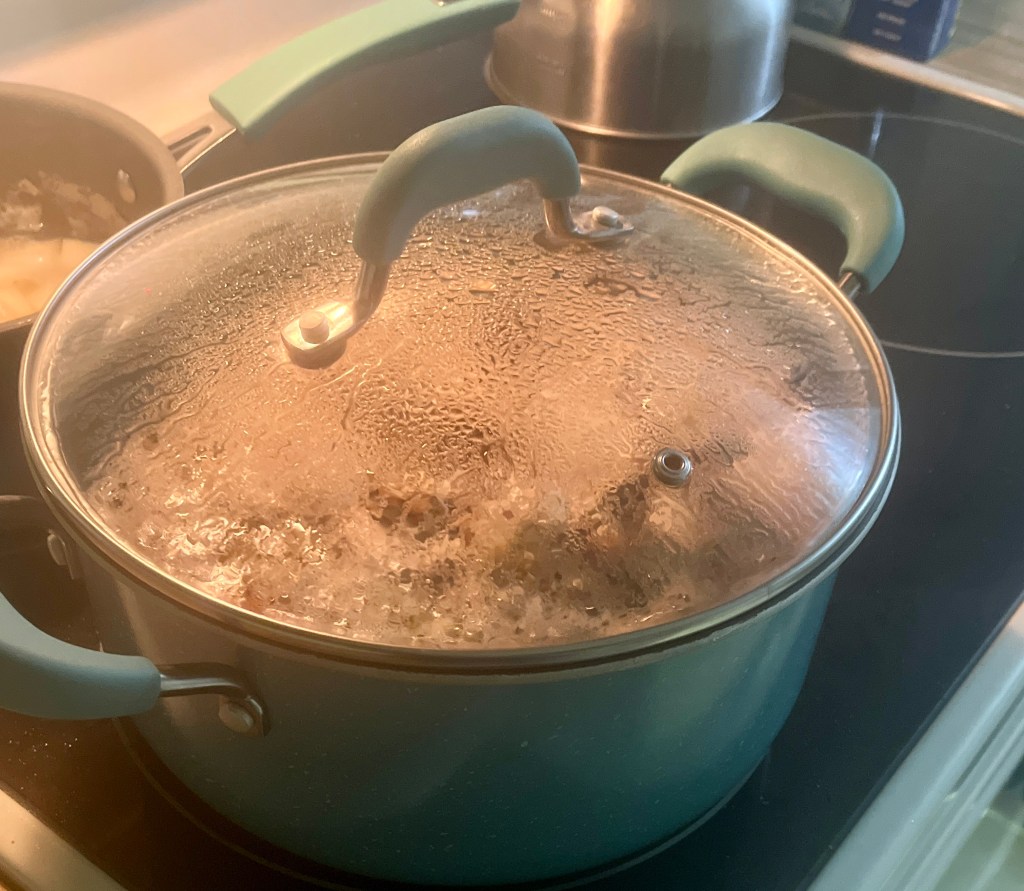
Make the most of cooking a whole chicken, maybe in the slow cooker, by keeping food waste to a minimum and translating those flavors to a delicious thick homemade chicken stock.
The main thing you need for this is a pretty hefty sized pot with a lid, a decent amount of time (the longer the better) and a good thing to store it in afterwards.
Ingredients
- Chicken bones
- Chicken giblets
- Chicken fat/juices
- Vegetable peel/Leftover vegetables/’Aging’ Vegetables
- Salt and pepper
- Water
Method
- Place the bones and giblets into the pot. I use the largest pot that we have in the house because these take up a pretty hefty amount of room and you can add a large amount of water and still get a fairly intense flavor.
- Add any vegetable peel, leftovers vegetables or aging vegetables that you might have into the pot too. You might want to chop up anything of a significant size; a whole carrot down to inch chunks for instance.
- Here I tend to add in any juices or fat from cooking the chicken as well. It means that you might need to skim fat off before using the stock for certain meals but it helps to give it an extra bit of profile and it is always good to have it there as an option.
- Consider the seasonings that you might have already added to vegetables and the chicken and then add more salt and pepper to the pot accordingly. You can also add other flavors but consider how much versatility you are going to need from the stock before doing this.
- Add the water, until it is about two inches from the top, and bring it up to a boil before allowing it to simmer for at least three hours. If possible do it for longer, probably up to about eight hours, just be sure to give it a little stir sometimes and look out for any vegetables or pieces that might do better to be scooped out and removed earlier.
- Give it a while to cool down before using a fine sieve or a very careful hand with the pot lid to transfer it out and into a suitable jug or storage container. Depending on what you used and how much it disintegrated you might want to double sieve it to make sure no unpleasant bits linger in your stock!
Using And Storage Tips
As much as you might be tempted to throw all the leftover bits away as soon as you have drained them out try to make sure everything is well cooled first. The bones can retain heat for a while and putting them into a trash bag too early could either cause bag issues or if you then immediately seal it up (because stinky) that it will only add to the moisture and stink.
When I did this after slow cooking the chicken I ended up putting this into several Tupperwares but after roasting one since I just put it all into a big ‘picnic’ style jug and making sure the lid was securely twisted around. Storing it in a jug allowed for it to all be stored in one place and made for easy pouring too but depending on your household you might need to give people a heads up to the contents of the jug so they don’t reach for it instead of a beverage!
If you know you wont be able to use it all up before it starts to go bad, this can last for about a week in the fridge, you could put it into smaller amounts and in the freezer. If you have ice trays or silicone molds you could put it into those and just pop them out straight into your next dish instead of having to defrost or hack at a solid block down the line.
Things I use the stock for include, but are certainly not limited to, putting it into the rice cooker (3/4 stock 1/4 water), risottos, adding to mashed potatoes, using as a base for a soup and one dish oven pasta dishes.
 DANNIIXBHRI